Online Tajweed Classes in Dallas and Houston | MQI Blog
Online Tajweed Classes – Learn Quranic recitation with expert guidance at Maryam Quran Institute.


Quran Tajweed Classes Maryam Institute. Read the Quran online with clarity, confidence, and care—guided every step by Maryam Quran Institute.
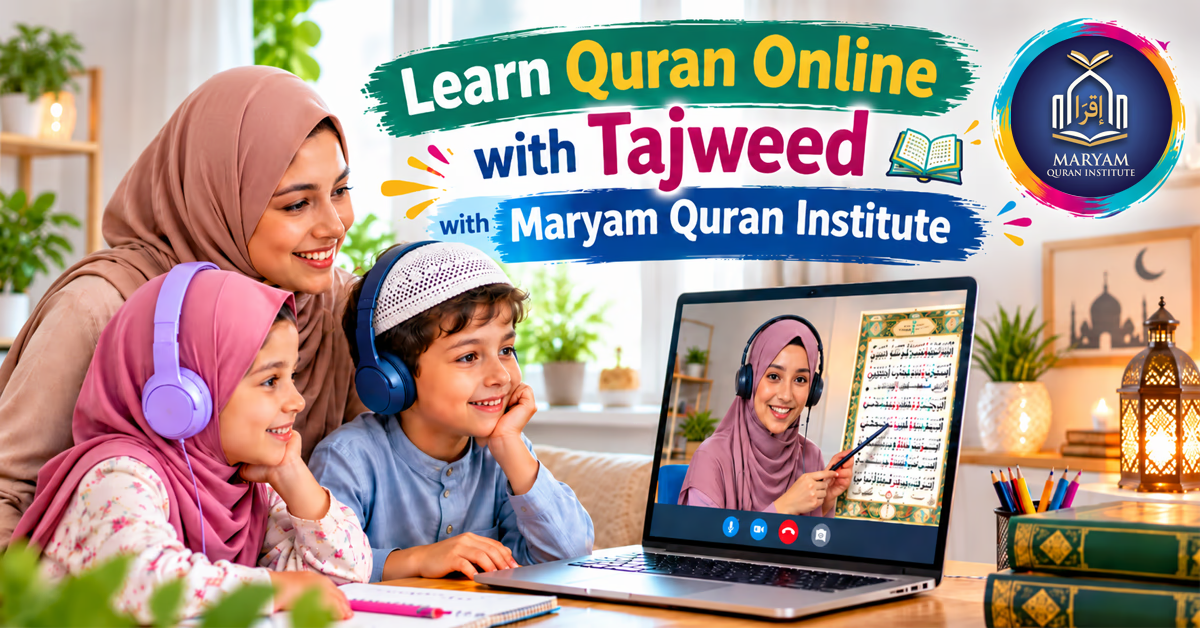
Maryam Quran Institute offers online Tajweed classes for busy families. Flexible learning supports consistency, and classes welcome women, girls, and boys up to 10 years old. While many learners worry about pronunciation, teachers offer clear guidance. Serving as a simple guide, this article explains the class flow and progress steps and then outlines helpful practice routines. Ultimately, this guide helps learners move forward.
Tajweed is like learning correct notes before singing, setting the foundation for clear reading. When learners pronounce sounds correctly, they protect meaning. Words lose clarity without Tajweed, but guided practice helps address mistakes. As learners improve, Tajweed builds confidence for Salah and fosters steady growth.
Also Read: Online Tajweed Course UK
Many learners guess sounds, but Tajweed brings clarity and structure. Correct recitation shows respect for the Quran, and confidence grows with steady correction. Teachers quickly identify mistakes.
Generally, women prefer calm learning spaces. Children build correct habits early because early guidance prevents errors. Additionally, Tajweed improves fluency. Furthermore, parents value structure. In Summary, classes remove confusion.
Maryam Quran Institute welcomes those seeking to improve. The program serves women, girls, and boys under 10, with focused instruction aiding progress. Beginners and improving readers can join, and teachers conduct assessments to keep learning stress-free.

Women, especially those with weak reading skills, can begin confidently. Adult learners appreciate gentle support that helps their confidence grow gradually. Online classes feel safe, and teachers give clear corrections. Structured plans are in place to guide progress, leading to improved confidence over time.
Generally, girls start early and form good habits. Early Tajweed helps prevent mistakes. Lessons improve clarity, and safe classes encourage questions with strong parental support.
Boys learn quickly with repetition and short lessons, as their attention shifts fast. Regular correction improves pronunciation, and routine builds discipline over time.
To be eligible, learners should seek guided Tajweed classes. The program is best for women, girls, and boys up to age 10. Regular attendance is expected because consistency improves skill. Learners interested in receiving correction and respectful teaching will benefit most from the program.
Trust is key when families choose Quran learning. Organized classes and clear goals from teachers build confidence. Maryam Quran Institute upholds these values, giving families peace of mind.
Also Read: Tajweed Quran Online in Stockholm, Sweden
Trusted learning offers safety and a clear syllabus, providing direction. Teachers kindly correct and track progress, helping confidence grow.
Classes stay calm, with clear communication to aid understanding and reduce fear. Teachers correct gently, and structured routines help improve results over time.
Families review syllabi. Parents ask about correction because feedback shapes results. Additionally, institutes offer trials. Schedules matter presently. Above all, child safety comes first.
Tajweed teachers need both knowledge and clarity in teaching. Explaining sounds patiently increases trust and ensures steady progress.
Teachers recite correctly and show kindness, ensuring learners feel comfortable. Clear explanations and goal-setting keep motivation rising.
Correction is supportive yet clear. Teachers model sounds for imitation, give brief explanations, and follow with focused drills to build confidence.
Parents ask about testing, correction methods, and progress tracking. Homework fits schedules, and support for shy learners is important.
Online Tajweed succeeds through structured lessons and regular correction, which exposes errors. Teachers cover essentials simply while students learn from home, making this approach popular with families.

Initially, learners begin with trials. Teachers listen carefully because placement saves time. As a result, teachers assign levels. Lessons continue subsequently. Eventually, errors reduce.
Students recite small portions, with teachers correcting letters and explaining needed changes. Daily practice follows, leading to improved reading.
Learners need a device, a stable internet connection to avoid distraction, a quiet space, and a notebook for revision.
Level tests ensure proper placement. They prevent confusion since skill levels vary, allowing teachers to focus on needs. This saves families time and increases confidence.
Learners differ, so levels guide progress. Tests reveal gaps, helping teachers plan lessons and adjust goals. Learning then improves over time.
Teachers check letters. Rule application demonstrates real skill. Teachers also assess fluency. Reaction to correction matters. Ultimately, levels become clear.
Correct placement sharpens focus. Learners stay motivated because lessons match their ability. Eventually, progress accelerates. Hence, confidence increases.
Syllabi guide learning. Parents understand progress because planning reduces stress. Additionally, structure shows quality. In essence, learning feels organized.
Beginners learn letter sounds. Practice matters because repetition builds accuracy. Further, short readings help. In short, rules stay simple.
Learners apply rules. Fluency improves because guessing stops. As a result, errors are reduced. Eventually, reading smooths.
Advanced learners refine details. Control improves because habits stabilize. Thereupon, reading flows. In summary, confidence rises.
Generally, teachers track mistakes. Revision matters because habits repeat. Additionally, checkpoints support learning. In conclusion, motivation remains strong.
Maryam Quran Institute delivers supportive Tajweed learning. Women, girls, and boys under 10 benefit. Begin with an assessment for structured growth and steady confidence. Start today: WhatsApp +1 (682) 583-1646, email contact@maryamquraninstitute.com, or visit www.maryamquraninstitute.com.

 09Sep
09Sep
 08Oct
08Oct
 23Oct
23Oct
 30Oct
30Oct
 10Aug
10Aug
 22Oct
22Oct
 by
by